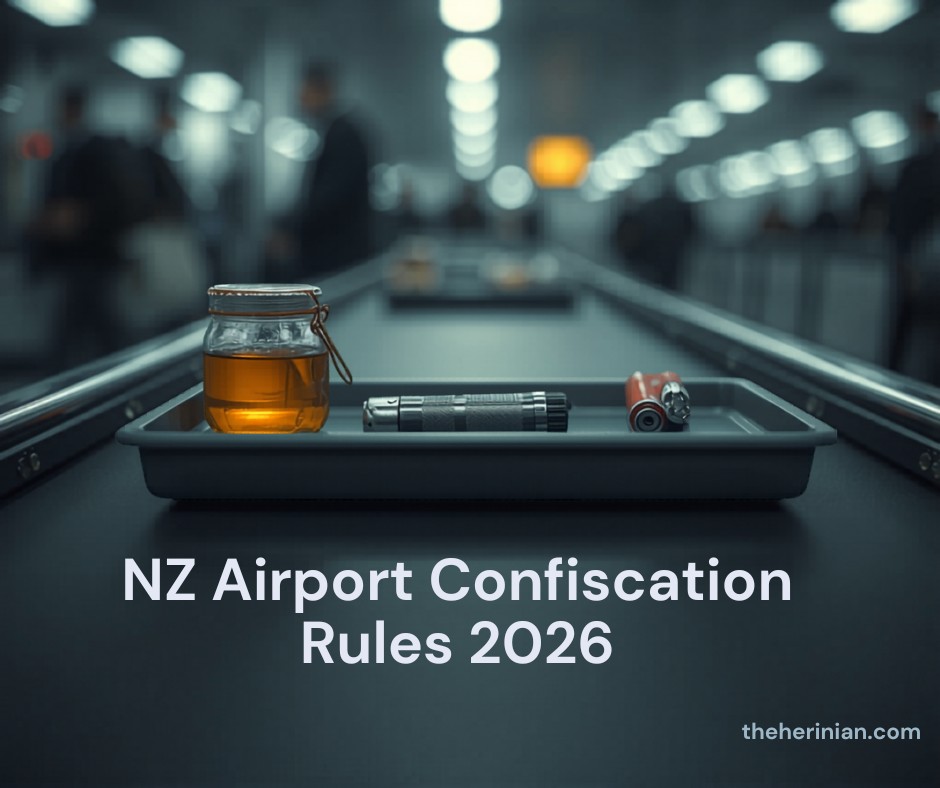
NZ airport confiscation rules catch people out on the same items, over and over — and after 11 years in New Zealand, I’ve watched it happen more times than I can count. Most of it is completely avoidable. Not because the rules are unreasonable, but because they’re more specific than people expect.
This guide covers the non-battery confiscation rules at New Zealand airports: honey and spreads, blades, tools, lighters, and the domestic-versus-international liquid rule that most travellers don’t know exists. For battery-specific rules — power banks, AirPods cases, wireless hair tools — see the dedicated battery guide here.
Quick Reference
| Item | Carry-on | Checked |
|---|---|---|
| Honey / jam / spreads (any size) | ❌ Over 100ml/g | ✅ Any size |
| Blade under 6cm | ✅ | ✅ |
| Blade over 6cm | ❌ | ✅ |
| Box cutter / Stanley knife | ❌ | ❌ |
| Old-fashioned straight razor | ❌ | ❌ |
| Scissors (blade under 6cm) | ✅ | ✅ |
| Metal shaft tools – shaft under 6cm (screwdriver, chisel, drill bit, nail) | ✅ | ✅ |
| Metal shaft tools – shaft over 6cm | ❌ | ✅ |
| Hand tools under 20cm (wrench, pliers, hammer, spanner) | ✅ | ✅ |
| Hand tools 20cm or longer | ❌ | ✅ |
| Large torch usable as baton (e.g. large Maglite) | ❌ | ✅ |
| Baseball bat / cricket bat | ❌ | ✅ |
| Toy guns (realistic-looking) | ❌ | ✅ |
| Lighter – double action (BIC-type) | ✅ on body only | ❌ |
| Lighter – lithium/plasma/arc (with safety cap) | ✅ on body only | ❌ |
| Blue flame / cigar lighter | ❌ | ❌ |
| Large lighter (BBQ etc.) | ❌ | ❌ |
| Single action lighter | ❌ | ❌ |
| Matches (if no lighter) | ✅ on body only | ❌ |
| Liquids / aerosols / gels – international carry-on | ✅ Under 100ml per container, all in 1L bag | ✅ Any size |
| Inorganic powder – international carry-on | ✅ Under 350ml total | ✅ Any size |
| Liquids / powder (domestic NZ flights) | ✅ Any size (sealed) | ✅ Any size |
Honey, Jam, Butter & Spreads
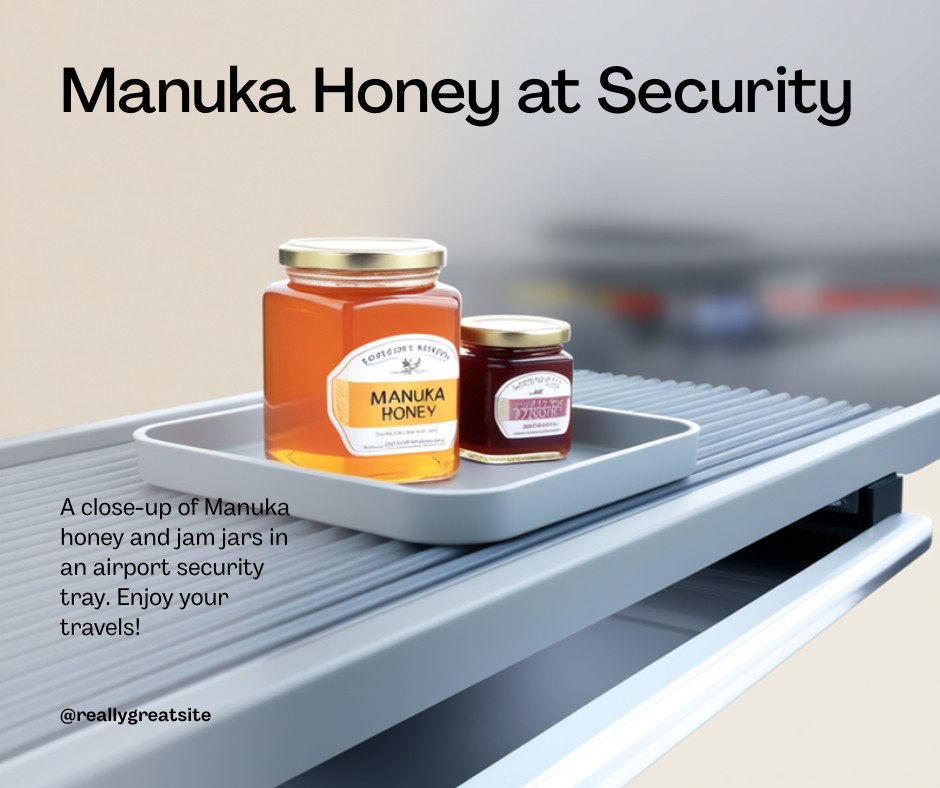
Manuka honey is New Zealand’s most confiscated souvenir. Not because it’s illegal — it’s perfectly fine to take — but because people carry it the wrong way.
The Rule
Any food that is spreadable is classified as a liquid under international aviation security rules. This covers:
- Manuka honey (all grades, all sizes)
- Jams, marmalades, jellies
- Butter and nut butters
- Hummus, peanut butter, Vegemite
- Sauces, pastes, dips
If you can spread it, it’s a liquid. A 250g jar of Manuka honey in carry-on: confiscated. A 500g jar: same. The honey isn’t prohibited — it’s the container size in carry-on that’s the problem.
The Fix
Put it in checked luggage. That’s the entire solution. Wrap it in bubble wrap, seal it in a zip-lock bag in case it leaks, and check it in. No size limits apply in checked luggage.
One exception worth knowing: this rule applies to international flights. On New Zealand domestic flights, the 100ml liquid rule does not apply — more on this below.
Australia biosecurity note: if you’re flying to Australia with honey, check the current biosecurity requirements. Australian border rules on food products change periodically.
Blades and Sharp Objects
The 6cm Rule
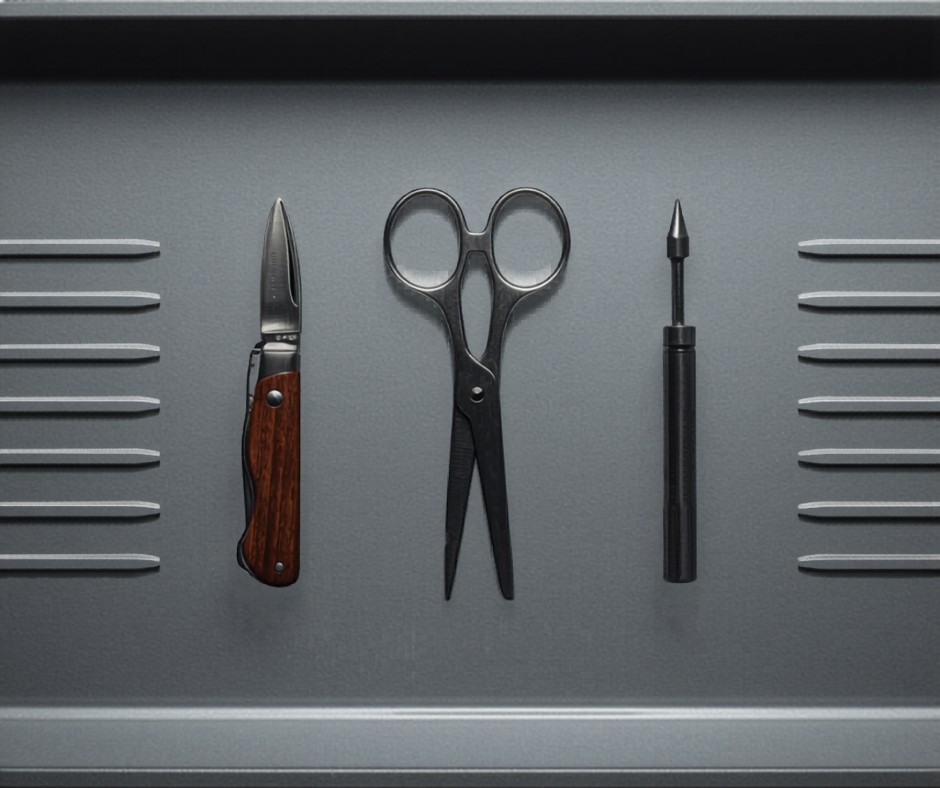
The blade length determines where it can go:
- Under 6cm: allowed in carry-on (penknives, small folding knives, small scissors)
- Over 6cm: carry-on prohibited, checked luggage only
- Any size: checked luggage is fine for all blades that are otherwise legal
A small pocket knife with a 5cm blade — carry-on allowed. A kitchen knife, a fishing knife, a hunting knife — checked luggage only.
The 6cm rule also applies to tools with a metal shaft: screwdrivers, chisels, drill bits, nails, awls. If the metal shaft exceeds 6cm, it goes in checked luggage. See the Tools section below for full details.
Scissors follow the same logic: blade under 6cm (the cutting edge, not the overall length) is carry-on permitted. Nail scissors, small travel scissors: fine. Full-size kitchen scissors: check them in.
Items Banned Regardless of Size
Two categories cannot travel in either carry-on or checked luggage under any circumstances:
Box cutters and Stanley knives — the retractable blade style. These are prohibited on New Zealand flights regardless of blade length. The specific design is the issue, not the size.
Old-fashioned straight razors — the single fixed blade style used before safety razors. These cannot travel at all. Safety razors with replaceable blades are a different matter: the razor handle is fine in carry-on, but the spare blades must go in checked luggage.
Tools and Sports Equipment
The 20cm Tool Rule
Hand tools fall into two categories depending on whether they have a pointed or sharpened metal shaft:
Two separate rules apply depending on the type of tool.
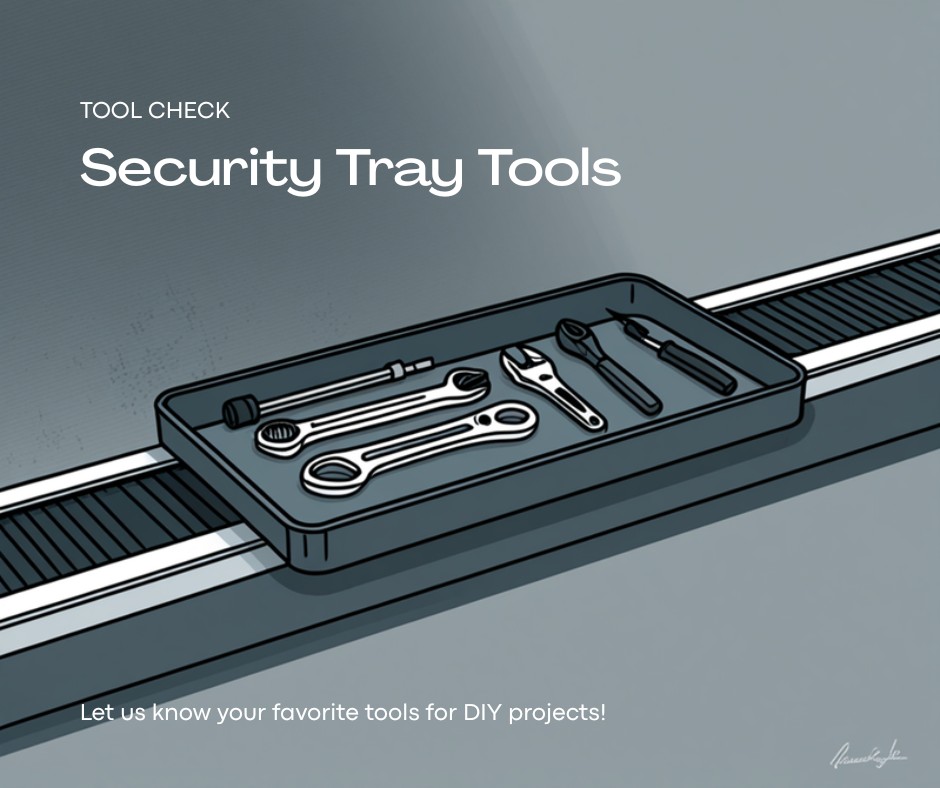
Tools with a metal shaft — screwdrivers, chisels, drill bits, nails, awls — are subject to the 6cm rule. If the metal shaft exceeds 6cm, it cannot go in carry-on. The overall tool length doesn’t matter; it’s the shaft that’s measured.
All other hand tools — wrenches, pliers, spanners, hammers, crowbars, spades — are subject to the 20cm rule. Any hand tool 20cm or longer must go in checked luggage. Under 20cm, carry-on is fine. AvSec specifically lists hammers (sledge, claw, ball), spanners, spades, and crowbars as examples of tools that must be checked when 20cm or over.
One extra category: large torches designed to be used as batons — like a large Maglite — are not permitted in carry-on regardless of length.
Note on power tool batteries: if you’re travelling with cordless power tools, the battery must always travel separately in carry-on regardless of where the tool body goes. See the battery rules guide for full details on tool battery rules and the 2026 FlexVolt change.
Blunt Weapons and Sports Equipment
Items that could function as blunt weapons are not permitted in carry-on regardless of their sporting purpose:
- Baseball bats
- Cricket bats
- Hockey sticks
- Golf clubs
- Ski poles
- Martial arts equipment (nunchaku, batons)
All of these can travel in checked luggage. None can go in the cabin.
Toy Guns and Imitation Firearms
This goes further than most people expect — and the consequences are more serious than a simple confiscation.
AvSec removes imitation weapons from passenger luggage almost daily. The reason the response is so serious: it is nearly impossible to tell the difference between an imitation firearm and a real one on an x-ray. So AvSec treats every suspected firearm as real until proven otherwise. That means the Explosive Detector team gets called, NZ Police are alerted, and the bag is cleared before it’s even opened.
If you’re found with an imitation firearm in carry-on or on your person, NZ Police will be notified, you may be arrested, and the item will be seized.
The only exception is toy guns that are obviously toys — brightly coloured, clearly plastic, nothing that could be mistaken for real. Anything remotely realistic doesn’t make it through.
What catches people: novelty items filled with alcohol or body wash shaped like pistols, lighters designed to look like handguns, replica souvenir firearms, and grenade-shaped items (coffee grinders, mugs, ornaments). These come up regularly and all trigger the same response.
Children’s plastic and wooden sports toys are also not permitted in carry-on, regardless of whether they look like weapons.
If you have a gift that might look suspicious on x-ray, don’t gift wrap it — AvSec can clear it quickly by sighting what it is. If it resembles a weapon in any way, leave it at home or pack it in checked luggage.
Lighters
What’s Allowed
One lighter per person is permitted — with specific conditions on type, location, and what else you’re carrying.
Gas lighters (double-action): allowed if ignition requires two independent actions. A BIC lighter qualifies — you push down the red safety button and rotate the spark wheel. One motion alone does nothing. This is the most common type and the safest one to travel with.
Lithium-powered lighters (plasma, arc, tesla coil, flux lighters): allowed only if the lighter has a safety cap or mechanism that prevents accidental activation. Without that, it’s prohibited.
Survival firelighters (magnesium strikers, flint rods): allowed. These contain no fuel and don’t generate flame on their own, so they’re not restricted.
What’s Not Allowed
Blue flame / cigar lighters — the torch-style lighters used for cigars. These are completely prohibited. Leave them at home.
Large lighters — anything designed to light a BBQ or campfire. Not permitted on board.
Single-action lighters — any lighter that ignites with a single continuous motion. Not permitted in carry-on or checked luggage.
Extra lighters and matches — you can carry one lighter or one box of matches, but not both. If you bring a lighter, any matches must be relinquished. The limit is one fire-starting item per person.
Where the Lighter Must Be
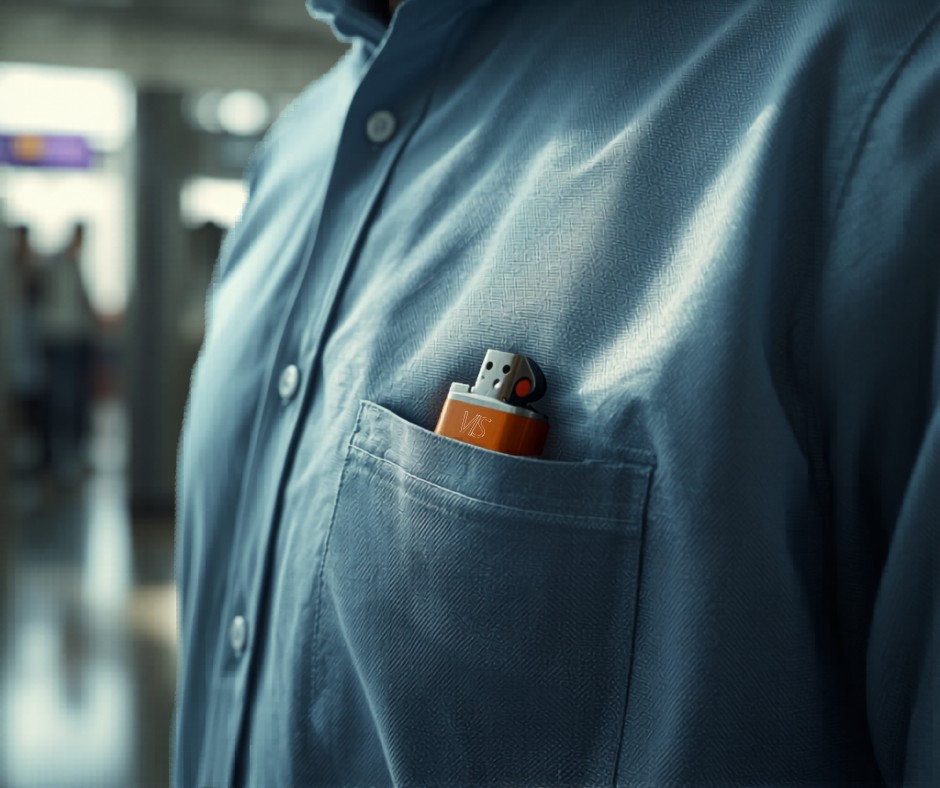
The lighter must stay on your body for the entire journey — not in any bag.
Not in your carry-on. Not in checked luggage. In a pocket, on your person, from security through to landing. AvSec’s position is clear: a lighter in luggage is inaccessible to crew; a lighter on your body is not. This applies for the duration of the flight, not just at boarding.
One lighter, in your pocket, correct type. Everything else gets taken.
Powders, Liquids, Aerosols & Gels (PLAGs)
This is probably the most underknown rule gap in NZ airport travel — and it’s more detailed than most people realise.
Where the Rules Apply
PLAGs restrictions apply only to carry-on luggage on international flights. They do not apply to domestic flights, and they do not apply to checked luggage. That’s the framework everything else sits inside.
International Flights: Liquids, Aerosols & Gels
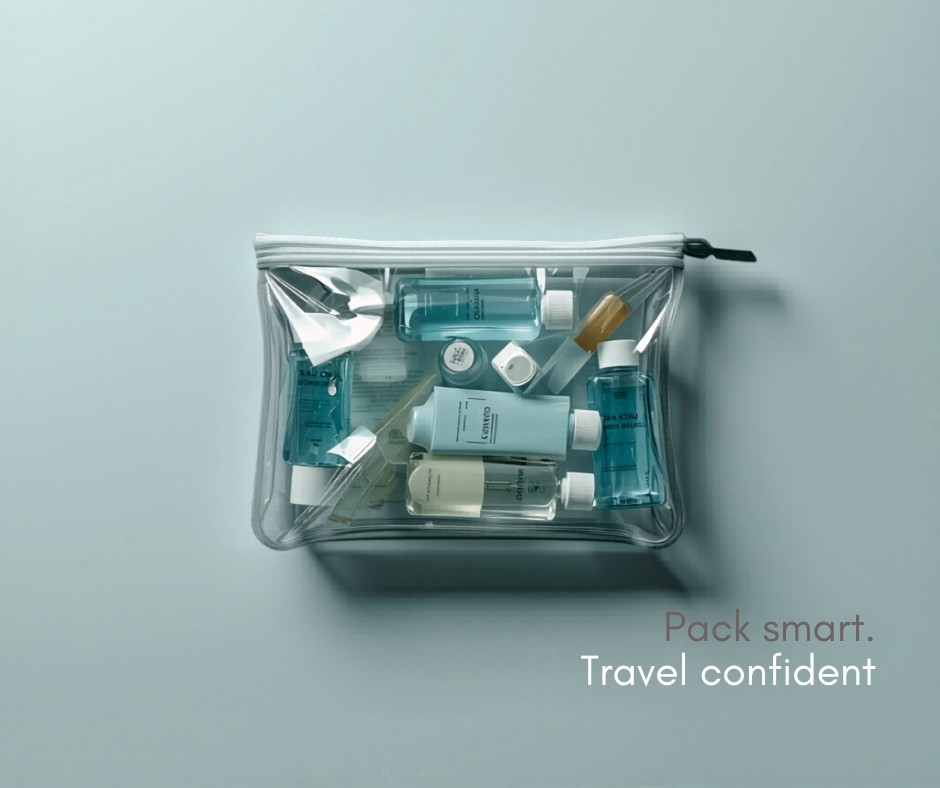
Each container must be 100ml or less. The restriction is on the container size, not the content — a 200ml bottle that’s only half full still doesn’t pass. If a container lists both ml and grams, the ml figure is what counts; grams only apply when ml isn’t listed.
All containers must fit inside a single resealable plastic bag no larger than 20cm × 20cm (approximately one litre). If you can’t fit everything in one bag, the excess won’t be allowed through.
Common items that catch people: honey, spreads, butter, jams, sauces, soft cheeses, yoghurt, perfume, toiletries, shampoo, sunscreen. If it pours, spreads, or sprays, the 100ml rule applies.
Duty free is exempt — goods purchased after security screening on the international side are not subject to these restrictions.
International Flights: Powders
Powders have a separate limit: 350ml (or 350g) total per person for inorganic powders in carry-on.
Inorganic powder is powder not derived from living matter — salt, talcum powder, sand, some cosmetics, some powdered deodorants, bath bombs, some laundry powders. Under 350ml total: stays in your bag. Over 350ml: must go in checked luggage (unless for a child or medical reasons, in which case it’ll be inspected).
Organic powders — flour, sugar, ground coffee, spices, powdered milk, baby formula — are not subject to the 350ml inorganic limit but may still be inspected. Powders do not need to be placed in a resealable bag.
Not obvious powder sources: the fill inside some stuffed toys and souvenirs, body powders, hand warmers, crushed shells.
Domestic New Zealand Flights
None of these restrictions apply on domestic NZ flights.
On domestic routes (Christchurch to Auckland, Wellington to Queenstown, etc.), you can carry liquids and powders of any size in your carry-on. The only practical requirement is that liquid containers are properly sealed and won’t leak in the cabin.
- A 500ml bottle of sunscreen: carry-on fine on a domestic flight
- A full-size shampoo: carry-on fine on a domestic flight
- Honey, any size: carry-on fine on a domestic NZ flight
The transit trap: flying domestic then connecting to an international flight? Once you pass through international security screening, the full PLAGs rules apply. A 500ml bottle that was fine on the domestic leg will be flagged at the international checkpoint.
Exemptions
The 100ml and 350ml limits don’t apply to:
- Prescription medicine — must be prescribed in your name, in original packaging, with evidence from your doctor that you need it during the flight
- Therapeutic / non-prescription medicine — creams, lotions, lip balm for medical conditions — in amounts reasonable for the flight only
- Travelling with a young child — formula (powder or liquid), milk, fruit drinks, baby food, baby powder, teething gel, Pamol, wet wipes, Vaseline — in reasonable amounts for the flight
- Special diets — requires a letter from a medical practitioner and commercially packed, unopened food only
- Cooling packs — allowed if needed to keep medicine or milk cold, with supporting documentation
Full details on all PLAGs exemptions are on the AvSec powders, liquids, aerosols and gels page.
What About Batteries and Heated Devices?
Batteries — power banks, AirPods cases, power tool batteries, vapes, drone batteries — and battery-powered heated styling devices (wireless straighteners, curling irons) have their own detailed rules. These are covered separately:
→ NZ Airport Battery Rules 2026: Power Banks, AirPods & What Gets Confiscated
The short version: all spare batteries carry-on only, always. Battery-powered heated styling devices need a removable isolation component to fly at all.
FAQ
Can I bring Manuka honey in my carry-on on a domestic NZ flight?
Yes. The 100ml liquid rule only applies to international flights. On domestic New Zealand routes, honey of any size can travel in carry-on, provided the container is properly sealed and won’t leak. The restriction kicks in the moment you’re on an international route or passing through international security screening.
Can I take a pocket knife on a New Zealand flight?
If the blade is under 6cm, you can carry it in your hand luggage. If the blade is over 6cm, checked luggage only. Box cutters and straight razors cannot travel in either bag.
How many lighters can I bring on a NZ flight?
One per person — and if you bring a lighter, you cannot also bring matches. It must be a double-action gas lighter (BIC-type) or a lithium/plasma lighter with a safety cap. Blue flame, cigar, and BBQ lighters are prohibited entirely. It must be carried on your body at all times — in a pocket — not in any bag.
Are tools allowed in carry-on on NZ flights?
Tools under 20cm in total length are permitted in carry-on. Tools over 20cm must go in checked luggage. Note that power tool batteries must always travel in carry-on regardless of where the tool body goes.
Can I bring full-size scissors in carry-on?
It depends on the blade length. Scissors with a cutting edge under 6cm are permitted in carry-on. Longer scissors must go in checked luggage.
What’s the difference between domestic and international liquid rules in New Zealand?
On international flights, the 100ml-per-container limit applies and all liquids must fit in a single 20cm × 20cm resealable bag. Inorganic powders (salt, talcum powder, bath bombs, some cosmetics) are limited to 350ml total. On domestic NZ flights, none of these restrictions apply — liquids and powders of any size can go in carry-on as long as containers are properly sealed. Watch the transit point: if you’re connecting from a domestic to an international flight, the international rules kick in at the international security checkpoint.
Can I bring powder (protein powder, spices, cosmetics) in carry-on on an international flight?
It depends on whether it’s organic or inorganic. Organic powders — flour, sugar, coffee, spices, protein powder, baby formula — are not subject to a fixed volume limit but may be inspected. Inorganic powders — salt, talcum powder, bath bombs, sand, some cosmetics and deodorants — are limited to 350ml total per person in carry-on. If you’re carrying more than 350ml of inorganic powder, it needs to go in checked luggage. Powders don’t need to go in the liquids bag.
What happens to confiscated items at NZ airport security?
Confiscated items are disposed of immediately. They are not stored, returned, or forwarded to you. Once an item is taken at the checkpoint, it’s gone. There is no appeals process at the point of confiscation, and items cannot be retrieved after the fact.
Related Guides
- NZ Airport Battery Rules 2026 — Power Banks, AirPods & Heated Hair Tools
- New Zealand Packing List — What to Actually Bring
- NZ Rental Car Insurance — Why Full Cover Is Worth It
Bottom Line
New Zealand airport security follows international ICAO standards, enforced consistently. The rules that catch people out aren’t unusual — they’re just more specific than most travellers expect.
Spreads go in checked luggage. Blades over 6cm go in checked luggage. Multi-tools over 9.5cm closed: check them in. One BIC-type lighter in your pocket — not a blue flame, not a BBQ lighter, and not if you’ve also packed matches. Tools over 20cm in checked luggage. On domestic flights, the liquid size limit disappears — but watch the transit point if you’re connecting internationally.
Five minutes of checking before you pack saves a lot of standing at a security counter watching something you paid good money for go in a bin.
Rules verified May 2026 against Civil Aviation Authority of New Zealand official guidance and the AvSec items removed during screening page. Always confirm with your airline for route-specific variations before travel.