
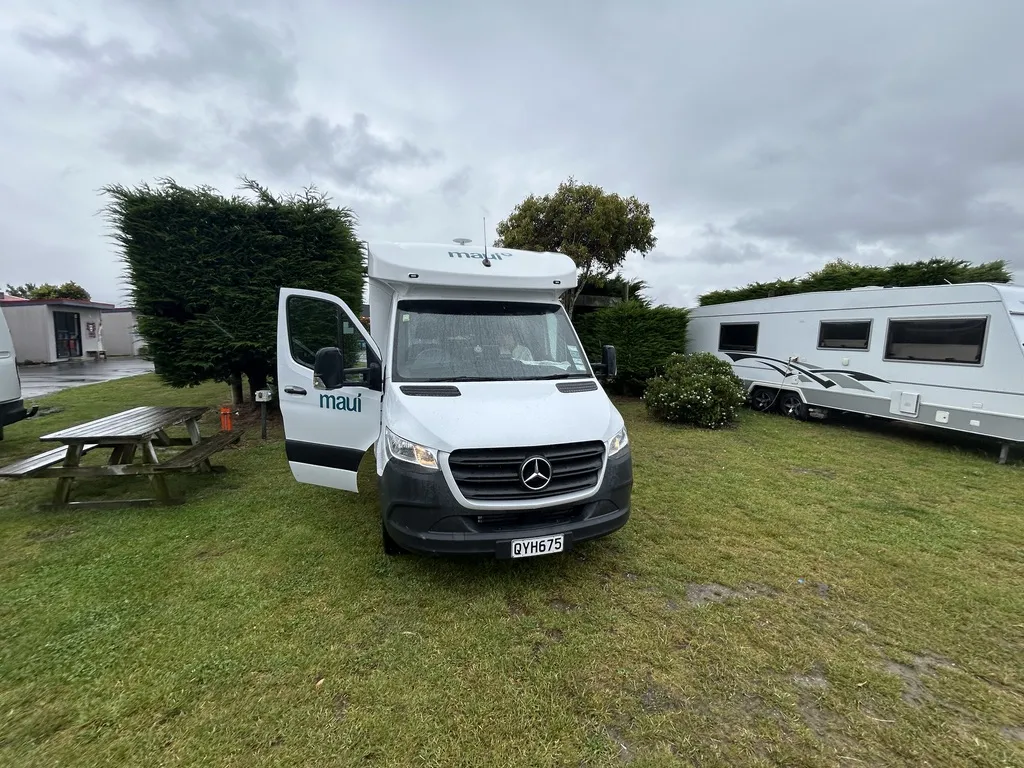
Every campervan review online sounds the same. “Spacious interior.” “Well-equipped kitchen.” “Perfect for exploring New Zealand.”
I’ve lived here 11 years. I’ve driven enough rental campervans to know what that means in practice: cramped benches, a saggy cab-over bunk, and a diesel engine that drinks money on the Crown Range.
So when we booked the Maui Cascade for our January 2026 South Island trip, I paid attention. Here’s everything — good, bad, and the one layout flaw that annoyed me by day two.
Quick Answer
Is the Maui Cascade worth it for a South Island family trip?
- Best for: Families of 4, trips of 3–7 nights, freedom campers who need self-contained certification
- Standout feature: Mercedes-Benz Sprinter base, 10+ km/L diesel fuel economy
- Main flaw: No in-transit table — meal setup requires full teardown each time
- On a relocation deal: NZ$151 (~US$92) total rental for 3 nights. Genuinely hard to beat.
- Skip if: You want a separate bedroom, or you have kids under 4
The Problem With Booking a NZ Campervan
Here’s what most travellers do wrong.
They search “campervan rental New Zealand,” click the first result, and pay NZ$250–400 per night for a vehicle they’ve never driven.
The smarter move — one most travel blogs don’t explain clearly — is to use the relocation market. Rental companies constantly need to rebalance their fleet between cities. They offer the same vehicles at near-zero daily rates to travellers willing to drive the right direction.
We booked our Maui Cascade as a Christchurch → Queenstown relocation, peak summer season, for a total rental cost of NZ$151 (~US$92) over 3 nights.
That’s not per night. That’s the whole thing.
If you want the full strategy, read our Complete NZ Campervan Relocation Guide. But first — here’s what the Cascade is actually like to live in.
Our Real Experience: 3 Nights, CHC to QTN
We picked up at the Maui/Britz Christchurch depot on a rainy January morning. The unit had under 40,000km on the clock — practically new.
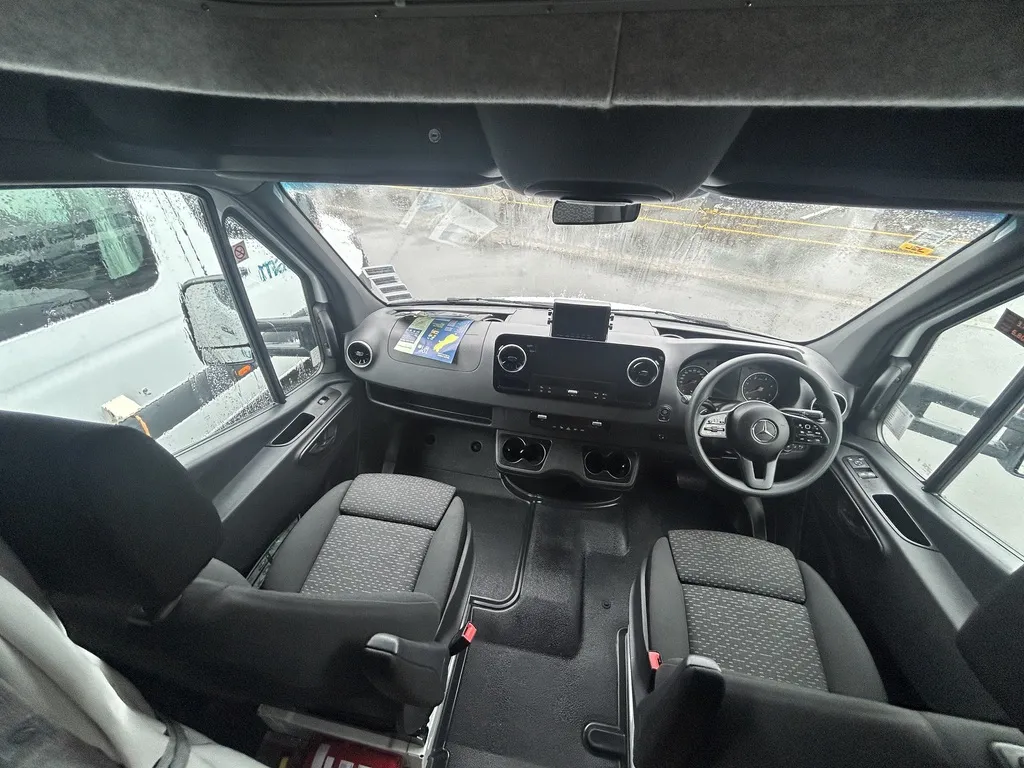
First thing you notice: it’s a Mercedes. Not a converted Toyota. The cab feels like a proper van, the seats are supportive, and when you pull onto the motorway, the engine doesn’t sound like it’s apologising for itself.
We drove for three days. Moeraki on night one, Dunedin on night two, Queenstown for the handover on day four. About 530km total.
What surprised me:
The fuel consumption. We filled up after 250km and used just under 25 litres. That’s 10km/L from a 3.5-tonne campervan. I don’t know if it’s the Mercedes engine, the fact the vehicle was barely run-in, or some combination — but it’s genuinely impressive.
The rear passenger experience. My kids could talk to me without raising their voices. That sounds small. After road trips in older vans where the living area is separated from the cab, it isn’t small.
What frustrated me:
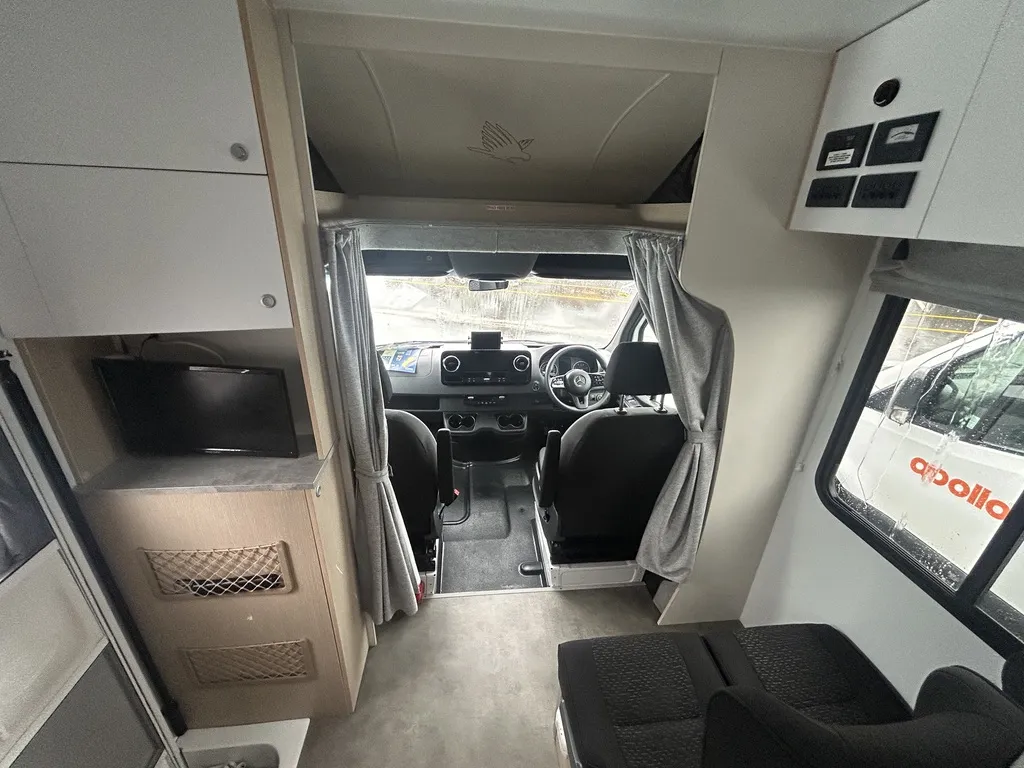
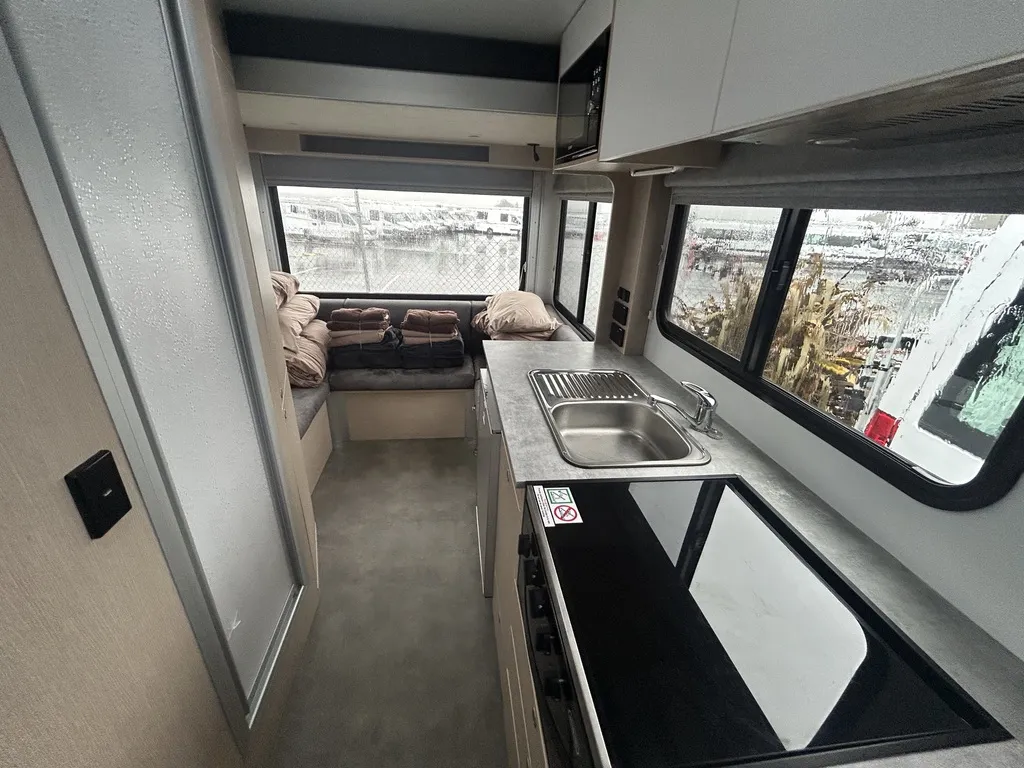
No table while driving. In older Maui models (the River, the Spirit), there’s a fixed table that passengers can use while the van is moving. In the Cascade, you have to pull over, set up the dining table, eat, then pack it down. Then convert the same area to a bed at night. Three-step routine, twice a day, every day.
By day two, our youngest was impatient with the setup time. By day three, so was I.
💡 Insider Tip: At the Maui Christchurch depot, there’s a “share cabinet” — a shelf of items left by previous travellers. Dish soap, toilet paper, condiments. Check it before you leave. We saved about NZ$15 in basics without even trying.
The Cascade Layout: What’s Actually Different
The Cascade uses a fundamentally different sleeping system to older Maui models. It matters more than the brochure suggests.
Older Maui models (River/Spirit):
A fixed cab-over bunk sits above the driver’s cab. Adults take the rear bed. Kids climb up into the hot, stuffy cab-over. It works. It’s dated.
Maui Cascade:
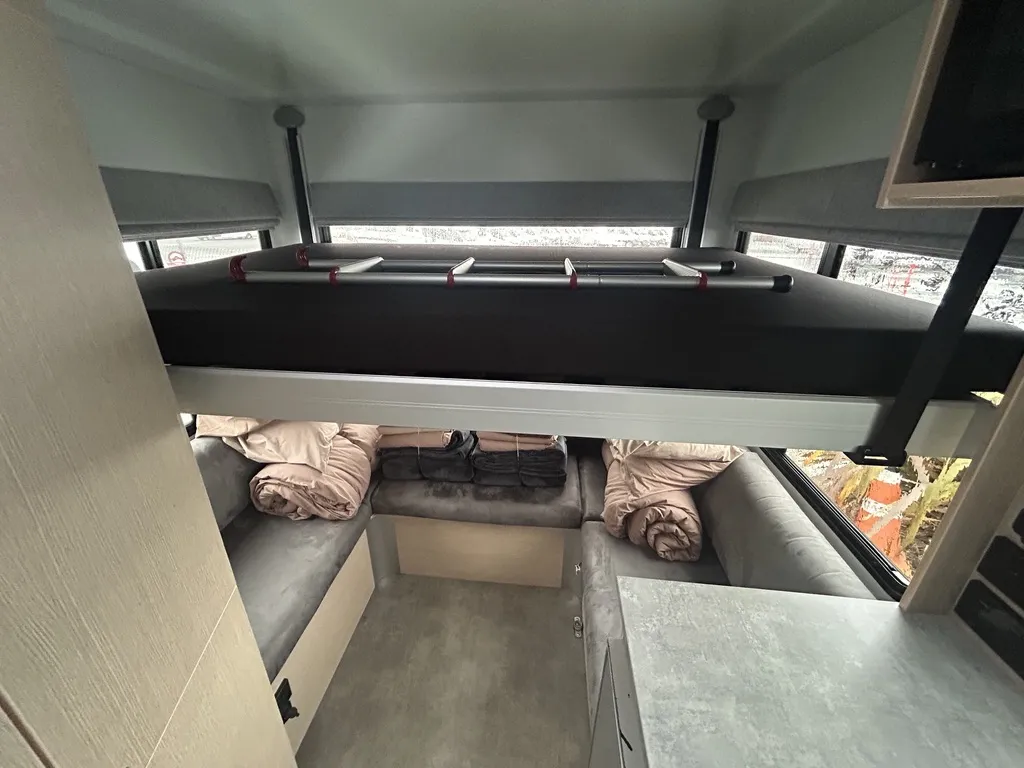
No cab-over bed. Instead, rear seats fold flat to create a lower bunk. An electric lift mechanism in the ceiling lowers a second bunk from above. Two sleeping areas, both in the main cabin, both at a reasonable temperature.
| Maui Cascade | Older Maui River | |
|---|---|---|
| Upper bunk | Electric ceiling lift | Fixed cab-over (above driver) |
| Lower bunk | Fold-flat rear seats | Fixed rear double |
| Rear passengers | Forward-facing, padded | Sideways bench |
| In-transit table | ❌ None | ✅ Fixed |
| Base vehicle | Mercedes-Benz Sprinter | Various |
| Our fuel economy | 10+ km/L (diesel) | ~8–9 km/L typical |
The electric lift bed is clever. It’s also slow — about 90 seconds each way. Plan your evenings accordingly.
Pricing: What the Cascade Really Costs
This post contains affiliate links. If you book through them, I earn a small commission at no extra cost to you. I only recommend what I’ve personally used.
Standard rental (peak season, January): NZ$200–400/night depending on availability and lead time.
Our relocation rate:
| Item | NZD | USD (approx) |
|---|---|---|
| Vehicle rental — 3 nights (relocation) | NZ$103 | ~US$63 |
| Excess reduction | NZ$48 | ~US$29 |
| Diesel fuel (~530km at 10km/L) | NZ$144 | ~US$88 |
| Road User Charges (RUC, diesel) | NZ$59 | ~US$36 |
| Total — transport + 3 nights accommodation | NZ$354 | ~US$216 |
Per person, per day: NZ$30 (~US$18). That covers both driving and sleeping.
Where to find relocation deals:
- Motorhome Republic — aggregates Maui, Britz, Apollo, and others
- Transfercar — NZ-specific, updates frequently
- iMoova — strong on last-minute deals
💡 Insider Tip: January and February are the best months for CHC→QTN relocation deals. Rental companies need vehicles moved south as the season winds down. Set up alerts on Transfercar — good deals go within 48 hours.
Freedom Camping in the Cascade
The Cascade is certified self-contained — onboard toilet and grey water tank included. This unlocks freedom camping at designated self-contained sites across New Zealand. No holiday park fees.
Our night one: Katiki Beach North Reserve, Moeraki. Flat gravel site, right on the beach, free.
That’s the experience campervans are actually built for. Ocean sound through the curtains, no neighbours with a generator, NZ$0 on your accommodation budget.
Must-have apps for freedom camping:
- Campermate — maps every site, dump station, and holiday park in NZ with current reviews
- CamperMate also shows self-contained vs non-self-contained requirements per site
Check current rules at Camping NZ before your trip — regulations have tightened in recent years.

The Battery Situation (Read This Before Night 1)
Morning of day two, I woke up to silence. No fridge hum. No pump. Total darkness inside the van.
The leisure battery had drained overnight.
Here’s what happened: short driving day, weak afternoon solar, fridge running on battery all night. Dead by 3am.
The fix: start the engine, run it 20–30 minutes. Alternator recharges the leisure battery. Everything came back. No damage, no call to Maui.
But you need to know this before it happens to you at 3am in a remote campsite.
⚠️ Local Warning: If you’re doing consecutive freedom camping nights without engine time, manage your battery actively. Run the engine each morning. Or request a unit with an upgraded solar setup — some vehicles in the Maui fleet have this, but you need to ask.
Who Should Book the Cascade
Best for families:
The Cascade is sized for exactly four people. Not six, not two — four. The bunk configuration, the passenger seating, the kitchen — all calibrated for a family of four on a 3–7 night trip.
Best for budget-conscious travellers:
The relocation market makes the Cascade accessible at a fraction of the standard rate. Combined with freedom camping, a family of four can travel the South Island on NZ$30/day per person in transport and accommodation.
Best for first-time NZ campervan travellers:
The Mercedes drivetrain means you’re not managing a nervous older vehicle on mountain roads. The Cascade drives like a large van, not like a converted bus.
Consider upgrading if:
- You want a fixed separate bedroom (look at Maui’s Ultima)
- You have children under 4 (the lift bunk requires coordination)
- You’re doing 8+ nights and need more kitchen/storage space
5 Mistakes to Avoid With the Maui Cascade
1. Skipping the relocation market.
Booking at standard rates is wasting money on this vehicle class. Check relocation options first — always.
2. Ignoring the battery on freedom camping nights.
Run the engine every morning. Don’t assume the solar will do the work overnight.
3. Not checking the share cabinet at pickup.
It’s at the Christchurch depot near the check-in area. Takes 2 minutes. Saves you NZ$10–20 in basics.
4. Booking Cardrona Pass with a campervan.
Most NZ campervan rental companies, including Maui, prohibit their vehicles on Cardrona Pass (Crown Range Road). Stick to SH6 via Kingston for the Queenstown approach. We did the Cardrona drive in a separate relocation car — more on that in the South Island budget post.
5. Adding blue cheese to your Ferg Burger.
Not campervan-related. Just hard-won Queenstown wisdom. Skip it. Order the onion rings instead.
FAQ
Is the Maui Cascade self-contained for NZ freedom camping?
Yes. It has a cassette toilet and grey water tank, giving it legal self-contained certification. Verify your specific unit at pickup — occasionally vehicles are swapped and you want written confirmation.
What’s the difference between Maui and Britz?
Both are owned by Tourism Holdings Limited (THL). The vehicles are often identical. Maui is marketed premium, Britz as mid-range. On relocation deals, you may get either brand. The actual experience is usually the same.
Do I need an international driving licence for a Maui rental?
If your licence is not in English, yes — you’ll need either an IDP or a certified translation. Most rental companies including Maui require this for non-English licences.
Can I book a Maui Cascade one-way from Queenstown to Christchurch?
Yes, and the QTN→CHC direction is often even cheaper on relocation. Rental companies need vehicles back north after summer. February–April is the best window for this direction.
Related Guides
- Complete NZ Campervan Relocation Guide — how to find and book relocation deals step by step
- Relocation Car Rentals in NZ — same strategy applied to regular cars
- Smartest South Island Road Trip Route — the route we drove, optimised for time and money
The Verdict
The Maui Cascade is the best production campervan we’ve driven in New Zealand.
The Mercedes drivetrain, the modern layout, the self-contained certification — it’s a genuinely capable vehicle that handles South Island roads well and costs very little on a relocation deal.
The no-transit-table issue is real. It will mildly annoy you by day two. It won’t ruin your trip.
On a relocation at NZ$151 for three nights? Stop deliberating. Just book it.
Ready to find a deal? Check current Maui relocation availability on Motorhome Republic or set up an alert on Transfercar. The deals are there — they just don’t wait.