Most people visit Aoraki Mt Cook in summer. The car parks are packed, the trails are crowded, and every social media photo looks the same.
We went in winter. And it nearly stranded us.
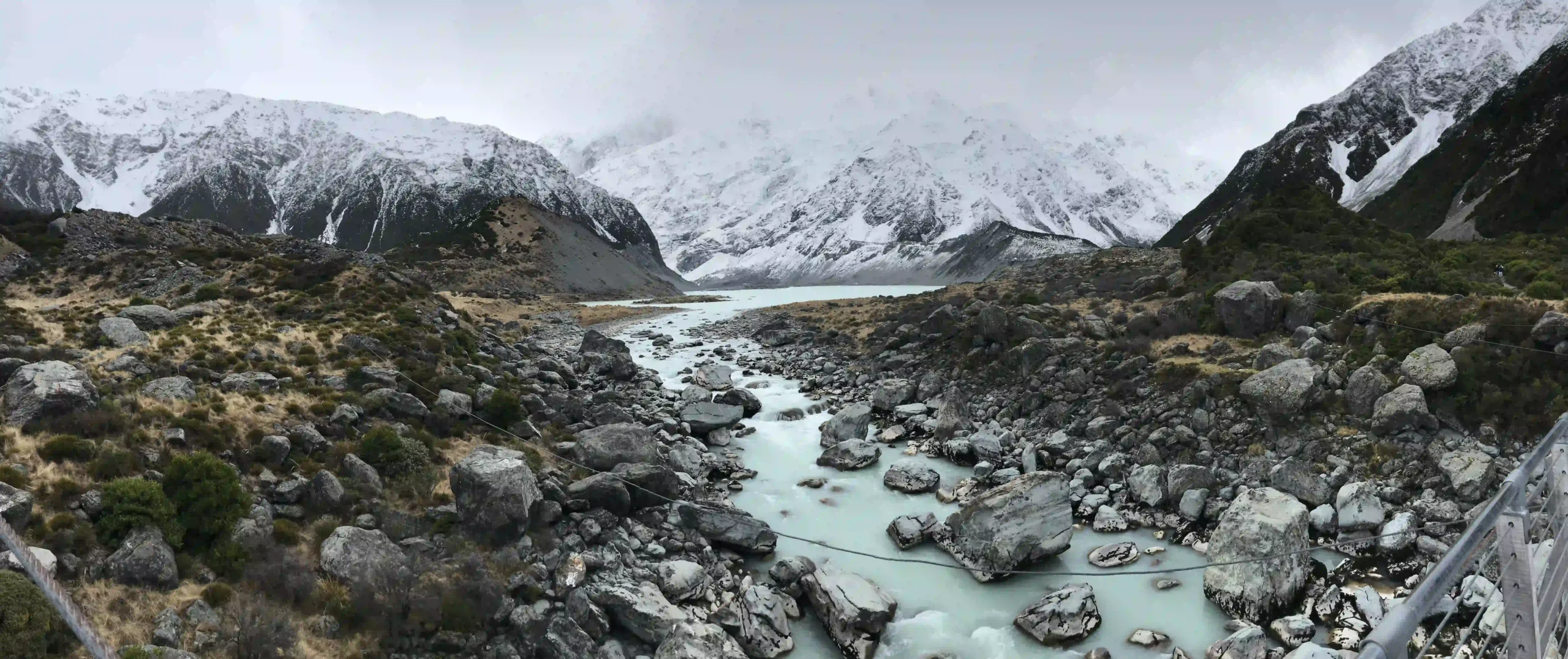
I’m not saying that to scare you off. Having lived in New Zealand for 11 years and driven the South Island more times than I can count, I think Mt Cook in winter is one of the most extraordinary things you can do in this country. The Hooker Valley covered in fresh snow. The mountain reflected in a silent lake. Absolute zero other tourists in sight.
But it comes with real risks that most travel blogs won’t tell you. In this guide, I’ll walk you through our complete 2-day winter trip — what went brilliantly, what nearly went wrong, and exactly what you need to pack and plan.
Quick Answer: Is Mt Cook Worth Visiting in Winter?
The short answer: Yes — but only if you prepare for snow and ice on the roads.
Here’s what you need to know upfront:
Best months: June–August for snow, September for quieter trails before crowds return
Hooker Valley Track: ⚠️ Bridge 2 closed since April 2025 — a spectacular new 189m bridge is under construction. Opening planned late July/early August 2026. Until then, the lower section (Bridge 1 → Mueller Lake viewpoint) remains open and is still worth the walk
Snow chains: Not optional. Carry them or you may not get out
Daylight: Sunset is around 5pm in June/July — plan your hike for the morning
Road closures: The Tekapo–Mt Cook highway can close without warning after heavy snowfall
Accommodation: Multiple options exist — from The Hermitage (premium) to Haka House (budget) to Glentanner Holiday Park (best for families in winter)
Why Most People Miss Winter Mt Cook (And Why That’s Your Advantage)
International visitors overwhelmingly visit New Zealand between November and March. That means the South Island’s alpine areas — Mt Cook included — are quiet, genuinely quiet, from June to August.
We arrived on a Saturday in August and counted fewer than 20 other cars in the main car park. In summer, that same car park overflows onto the road.
The trade-off is weather unpredictability. Alpine conditions can shift fast. What starts as light snow flurries in the morning can become a full whiteout by afternoon. We experienced exactly this on Day 2, and it changed our entire plan.
The reward for accepting that uncertainty? Hooker Valley in deep snow looks nothing like the photos you’ve seen. It looks better.
Day 1: Christchurch to Mt Cook — The Drive and the Hike
The Route and Drive Time
From Christchurch, Mt Cook is roughly a 3.5-hour drive through some of New Zealand’s most dramatic inland scenery. The route takes you through Ashburton, past Lake Tekapo, and along the shores of Lake Pukaki — that impossibly turquoise glacial lake that makes everyone question whether someone has edited the colours.
In winter, budget extra time. Ice patches can appear on the road between Tekapo and Mt Cook, particularly in the early morning. We left Christchurch at 7am and arrived at the national park around midday after a brief stop at Tekapo.
💡 Local tip: Pull over at the Lake Pukaki viewpoint on State Highway 8 before turning off toward Mt Cook. On a clear winter day, Aoraki appears perfectly framed above the lake. You’ll want to stop anyway — you won’t be able to help it.
Hooker Valley Track in Winter: What It’s Actually Like
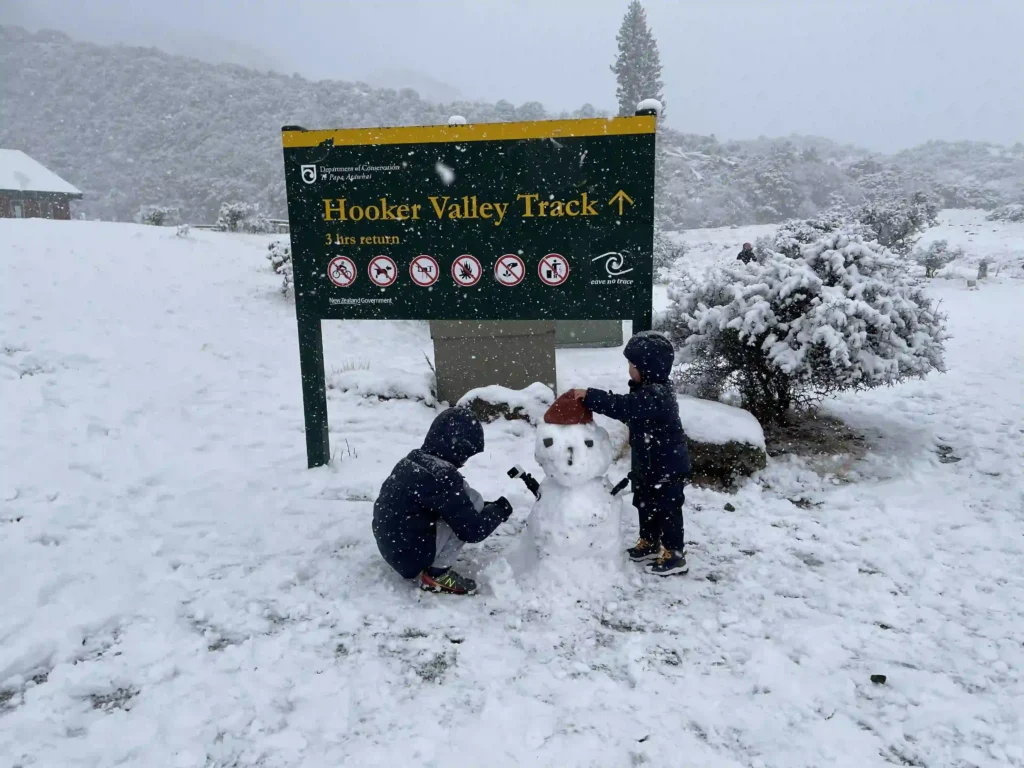
The Hooker Valley Track is New Zealand’s most popular alpine walk for a reason. It’s accessible, it’s achievable for families, and every single step of it has a view.
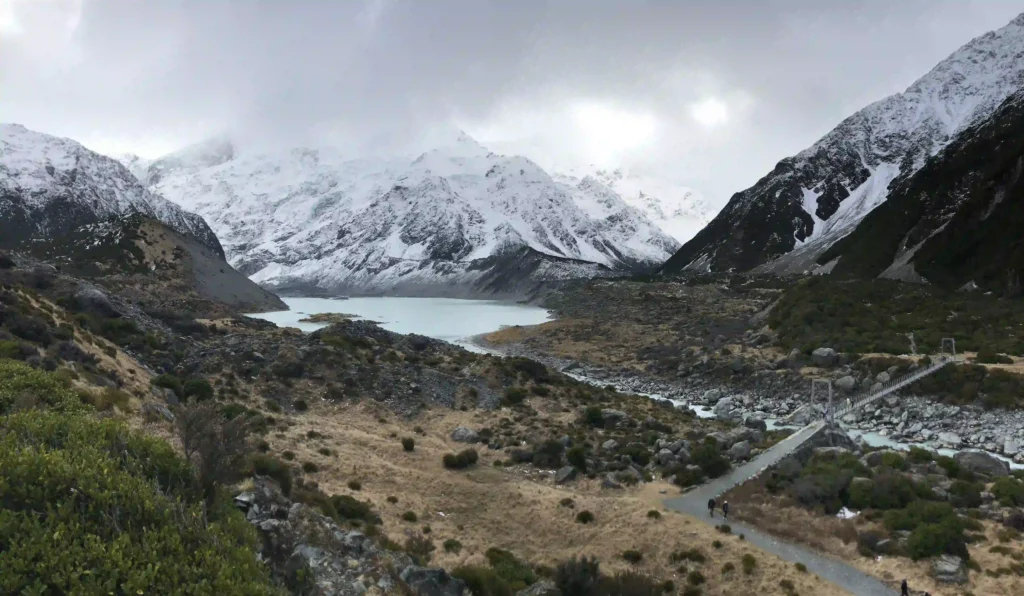
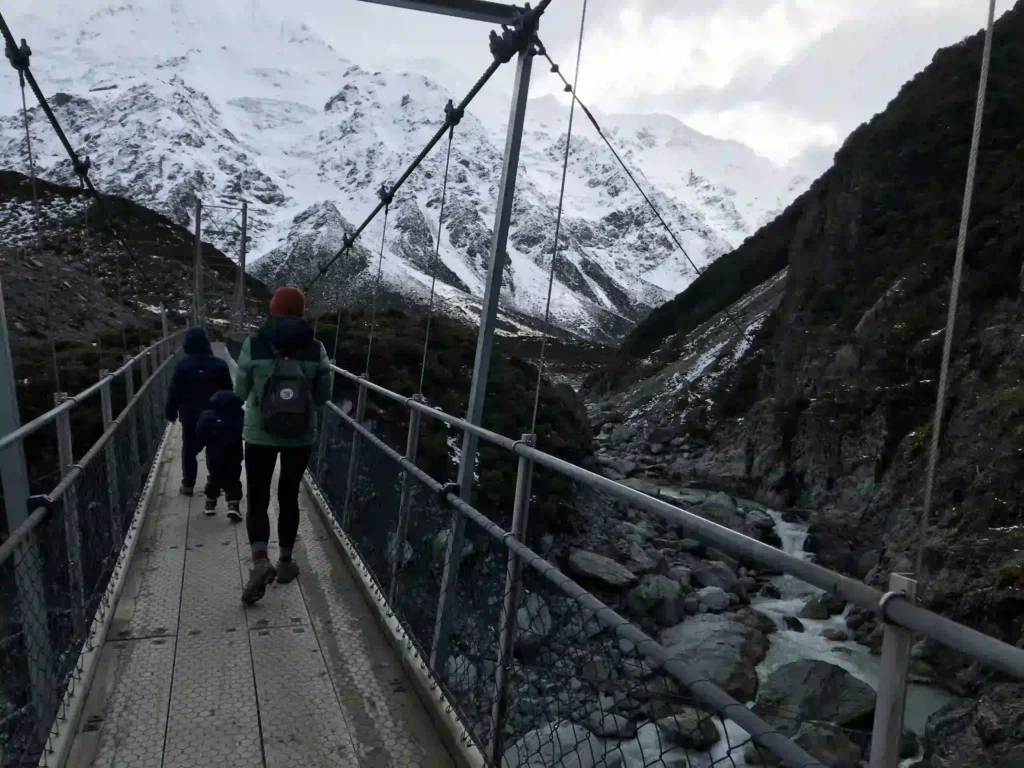
In winter, the track transforms. The gravel path takes on a layer of packed snow. The suspension bridges above the Hooker River frame a white valley that stretches all the way to the glacier. Most of the other walkers have gone home. It’s just you and the mountain.
⚠️ 2025–2026 TRACK UPDATE: Bridge 2 is currently closed. The second swing bridge was shut in April 2025 due to riverbank erosion near its supports. A spectacular new 189-metre suspension bridge — with steel cables sourced from Italy — is currently under construction and is on track to open late July/early August 2026. As of May 2026, the deck is being laid and DOC reports good progress.
What’s open now: The lower section from the car park to Bridge 1 and the Mueller Lake viewpoint is fully open and worth doing. Check DOC’s track page for the latest status before you go.
Practical details for winter:
Distance (current): Approximately 4–5km return to the Mueller Lake viewpoint via Bridge 1
Distance (from late July/Aug 2026): Full 10km return to Hooker Lake once Bridge 2 reopens
Time: Allow 1.5–2 hours for the lower section (viewpoint), or 4–5 hours for the full track with children once open
Footwear: Waterproof boots are essential. Sneakers will get wet and miserable in 20 minutes
Conditions: The track is open year-round but can be icy near the bridges — walk carefully
On our visit, we hiked as far as Bridge 2 — the old bridge that has since been replaced. The stretch from Bridge 1 to the Mueller Lake viewpoint is genuinely beautiful and still gives you a dramatic sense of the valley in all its winter silence. If you’re visiting before the new bridge opens, this is your goal and it doesn’t disappoint.
When the new bridge opens, it will be a destination in itself — at 189 metres it will be one of the longest suspension bridges on any New Zealand walking track.
⚠️ Local warning: Daylight fades fast in winter. Start your hike before noon if you want time to explore without rushing.
Where to Stay at Mt Cook: All Your Options
There’s more accommodation in Mt Cook village than most guides mention. Here’s the honest rundown.
Option 1: The Hermitage Hotel — Premium, Views Unmatched
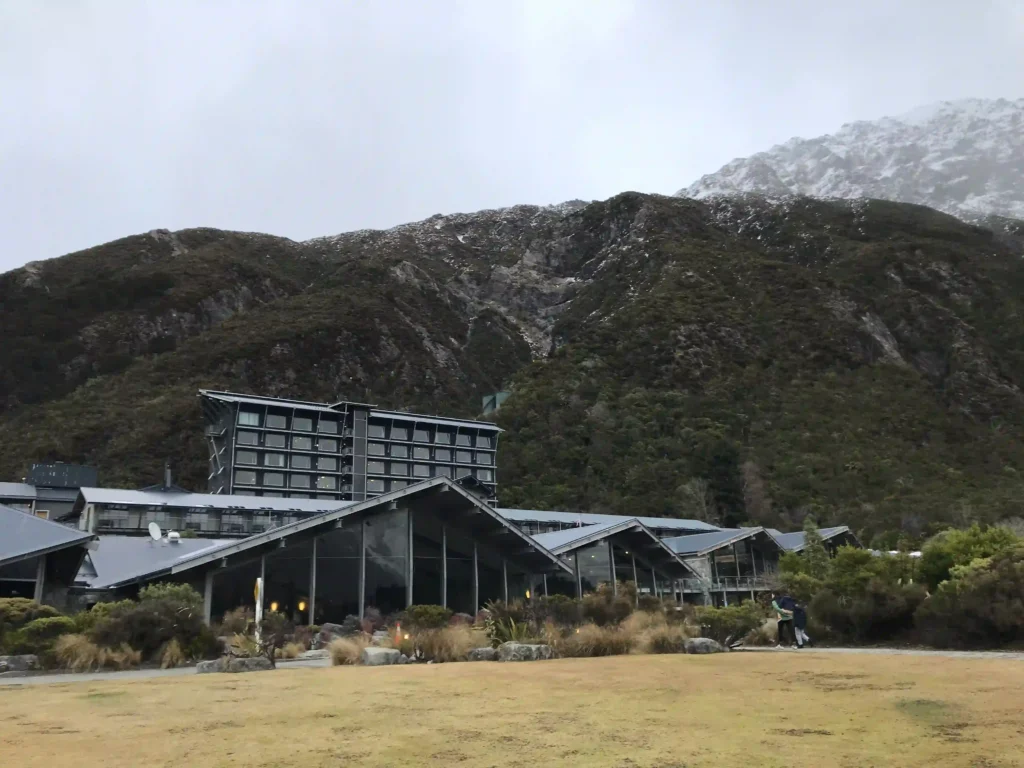
The Hermitage is the most famous hotel in the village and, in normal circumstances, one of the more expensive stays in the South Island. I want to be upfront about something: when we stayed in August 2021, we paid NZ$328 for a Superior Room with breakfast — a price that reflected a COVID-era promotional rate with virtually no international tourism. That was not a typical price.
In 2026, expect to pay NZ$450–700+ per night for a comparable room, depending on season and availability.
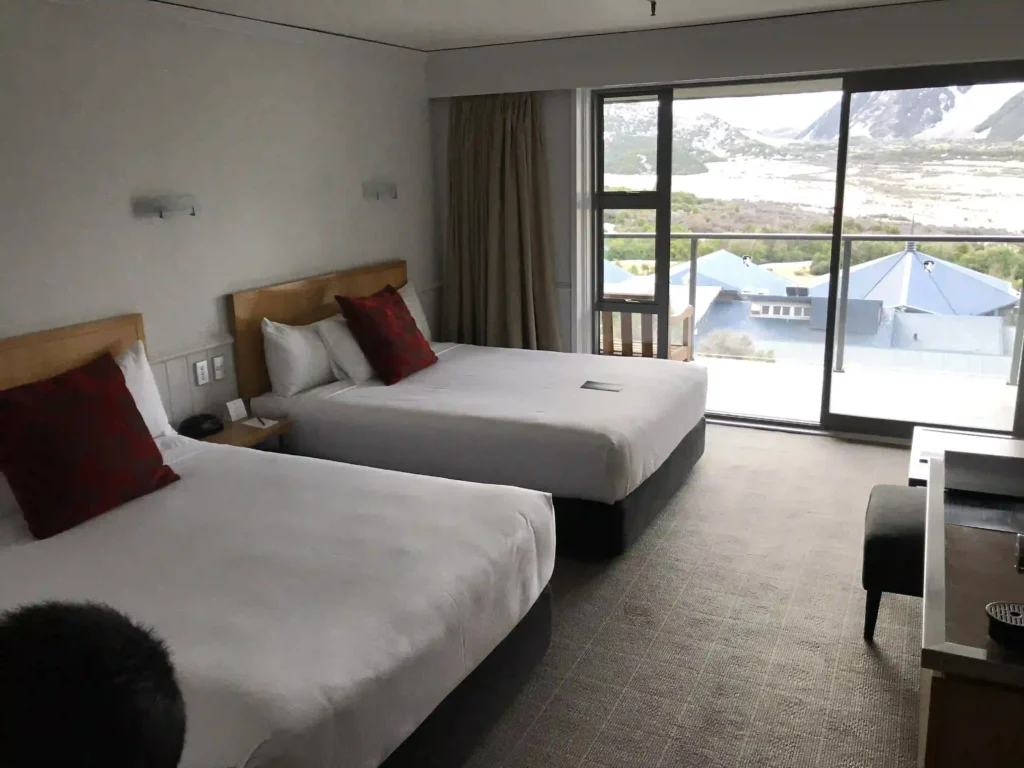
Is it worth it at full price? That depends on what you value. What IS exceptional is the view. Our 4th-floor room in Wakefield Wing had a direct line of sight to Aoraki. At 6am, before anyone else was awake, I sat on the balcony with a coffee and watched the first light hit the summit. That view is the product. The room itself is clean and comfortable but not luxurious — water pressure is weak, and the standard rooms won’t blow anyone away on their own.
The hotel café is reasonably priced for a remote mountain location. The main restaurant is significantly more expensive — we ate instant noodles in the room for dinner and have no regrets.
The Sir Edmund Hillary Alpine Centre in the hotel charges NZ$20 (~US$12) per adult. We skipped it; worth considering for older kids interested in mountaineering history.
💡 Booking tip: The Hermitage breakfast add-on (approx. NZ$50–60 per person) is reasonable value given how limited the alternatives are. Check for packages that bundle it in.
Option 2: Haka House Mt Cook — Budget-Friendly for Families
Haka House is a hostel-style property in the village and the best budget option available. The catch for families: it’s dorm-based accommodation by default. However, if you book an entire room as a group, you can secure it for your family only — this makes it workable for families who don’t mind a more basic setup.
Expect to pay significantly less than The Hermitage. It’s a practical choice if the priority is the landscape rather than the room, and you want to keep costs down.
Not ideal for younger children in winter given the communal facilities, but a solid option for families with older kids or those travelling on a tighter budget.
Option 3: White Horse Hill Campsite — Summer Only (Not for Winter Families)
The DOC campsite at White Horse Hill sits right at the Hooker Valley Track entrance — a spectacular location and genuinely one of the best-placed campsites in New Zealand.
However: it has no power hookups. In summer that’s fine. In winter with children, it’s a cold, uncomfortable proposition — temperatures drop sharply overnight and the lack of heating makes it unsuitable for families with young kids. It’s a great summer option for those travelling by campervan or tent, but rule it out for a winter family trip.
Option 4: Glentanner Holiday Park — Best Winter Option for Families
About 20km before Mt Cook village on the main road, Glentanner Holiday Park is the practical choice for families who want comfort without Hermitage pricing. It has powered sites and cabins, meaning you have heating — which matters a great deal in winter.
The views are still outstanding (you’re in the Mackenzie Basin, Aoraki is visible on clear days), and you can drive into the village for hiking. It’s a longer drive to the trailhead than staying in the village, but for a family with young kids in winter, the warmth and space of Glentanner makes it the smarter call.
Quick comparison:
Option
Best For
Winter Suitable?
Approx. Price (2026)
The Hermitage
Views, convenience, comfort
✅ Yes
NZ$450–700+/night
Haka House
Budget travellers, older kids
✅ Yes (book whole room)
NZ$150–250/night (room)
White Horse Hill Campsite
Summer campers
❌ No (no power)
NZ$25–30/person
Glentanner Holiday Park
Families, winter trips
✅ Yes
NZ$80–180/night
Verify current rates directly with each property before booking.
Day 2: The Snowstorm, The Snow Chains, and The Road That Closed
When the Forecast Says “Heavy Snow”
The forecast had flagged heavy snowfall for Day 2. I checked it the night before. I noted it. I did not fully believe it.
By 8am, I believed it.
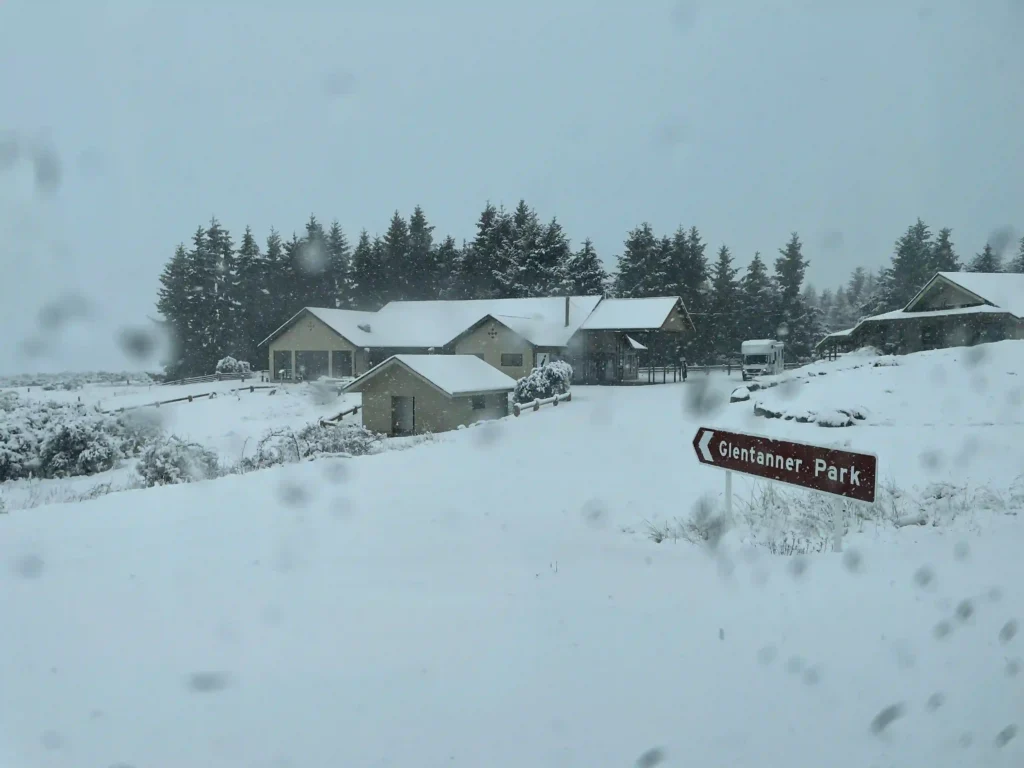
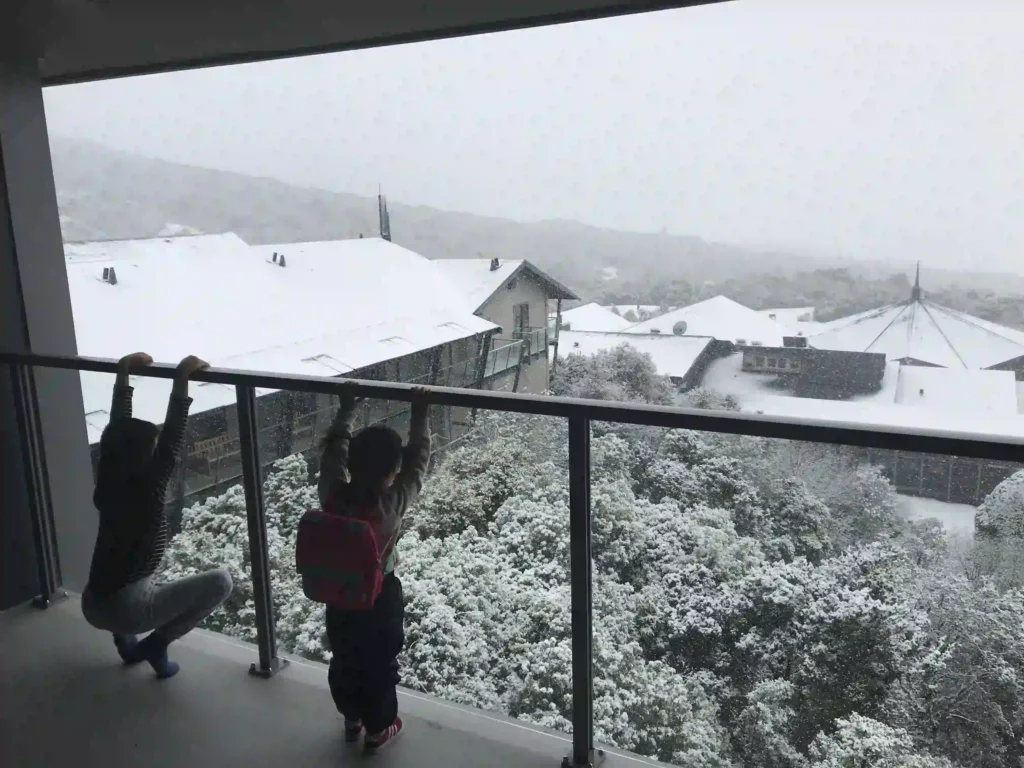
Overnight, Mt Cook village had transformed into something out of a Northern Hemisphere ski resort. Every car in the car park was buried. The road was white. The kids were thrilled. I was quietly working out our exit strategy.
Snow Chains: Not Optional
This is the single most important practical lesson from our trip.
Carry snow chains if you’re visiting Mt Cook in winter. Full stop.
We had ours because we’d bought them for ski trips. That decision got us out.
A small hill on the road out of the village — nothing dramatic, maybe a 15-degree incline — stopped our car completely. Two-wheel-drive sedans don’t handle fresh snow on a slope. We stopped, reversed, and fitted the chains in the snow. With chains, we drove right over it.
Even with chains, the car rotated sideways once on an icy patch. It was brief and we kept control, but it was the kind of moment that teaches you a lesson about mountain driving in winter.
⚠️ What happens if you don’t have chains: You wait. Someone else helps or you call for assistance. In a heavy snowfall event, that wait could be long. A 4WD vehicle significantly reduces this risk.
For the drive out: Once we reached the main lookout point further down the valley, the snow thinned quickly. We removed the chains on a dry section of road and continued without them.
The Road That Closed
We planned to drive home via Lake Tekapo — the standard, scenic route. At Twizel, we checked Google Maps and saw a red line where the Tekapo road should have been.
Closed. Heavy snow.
We had to detour via the coast — a significantly longer route that added 2 hours to our drive. We pulled into Christchurch at 7pm. A long day.
The lesson: Always check NZ Transport Agency’s road conditions before departing in winter. The Tekapo–Mt Cook corridor closes regularly after snowfall. Build buffer time into your return.
Twizel Lunch Stop: High Country Salmon
The silver lining of the longer drive was a lunch stop at High Country Salmon in Twizel — one of those places that genuinely earns its reputation. They raise salmon locally and serve it simply and well.
We ordered salmon sashimi, a salmon rice bowl, salmon chowder, and chips. Total for four: around NZ$80 (~US$48). Entirely worth it.
Twizel is a useful service stop regardless — fuel up here as there are limited options between Twizel and the coast.
Prices based on our August 2021 visit. Note: our Hermitage rate was a COVID-era promotional price — budget NZ$600–900+ for accommodation alone in 2026. Glentanner Holiday Park is the budget-friendly alternative.
What to Pack for Winter Mt Cook
This list is based on what we actually used:
Snow chains — the most important item on this list
Cash — the village is remote; card machines can fail
5 Mistakes to Avoid
1. Going without snow chains. If it snows (and in June–August, it often does), you may not be able to leave without them. Hire or buy them before you arrive.
2. Not checking the current track status before you go. Bridge 2 has been closed since April 2025 and a new 189m bridge is being built in its place. The lower section (Bridge 1 to Mueller Lake viewpoint) remains open. Check DOC’s track page before you visit — the new bridge is expected to open late July/early August 2026. Once it does, the full track is back.
3. Assuming the Tekapo road will be open. Always check road conditions before you leave Mt Cook. The Tekapo highway closes in heavy snowfall. Have an alternate route in mind.
4. Arriving after midday. With 5pm sunsets, afternoon arrivals leave very little time for hiking. Aim to reach the village by midday at the latest.
5. Assuming The Hermitage is the only accommodation option — or assuming it’s cheap. The village has several options: The Hermitage (premium — our rate in 2021 was an unusually low COVID promo), Haka House (budget hostel — book the whole room for families), and Glentanner Holiday Park (~20km out, powered sites, best for families in winter). White Horse Hill campsite has no power and is not suitable for families in cold weather.
Frequently Asked Questions
Is Mt Cook worth visiting in winter? Yes, Mt Cook in winter is absolutely worth it — the Hooker Valley covered in snow is one of New Zealand’s most beautiful sights, and the crowds are a fraction of summer. The key is preparation: snow chains, waterproof gear, and flexible plans for road conditions.
Can you hike the Hooker Valley Track in winter? Yes, but check the current track status first. As of May 2026, Bridge 2 is closed for reconstruction — a new 189-metre suspension bridge is being built and is expected to open late July/early August 2026. Until then, the lower section from the car park to Bridge 1 and the Mueller Lake viewpoint is open (approximately 4–5km return) and still very much worth doing in winter snow. Once the new bridge opens, the full 10km return track to Hooker Lake will be accessible again.
Do you need snow chains to drive to Mt Cook in winter? You don’t always need them on the road in — but you may desperately need them to get out if it snows overnight. We couldn’t have left the village without them. Carry chains if you’re visiting between June and September.
How much does The Hermitage Hotel cost? A heads-up: when we stayed in August 2021, we paid NZ$328 for a Superior Room with breakfast — a COVID-era promotional price with almost no other tourists around. That is not a typical rate. In 2026, expect to pay NZ$450–700+ per night for a similar room. It’s expensive, but the view from the upper floors directly onto Aoraki is genuinely exceptional. Budget alternatives in the village include Haka House (book the whole room for families) and Glentanner Holiday Park about 20km away — both significantly cheaper and both family-suitable in winter.
How far is Mt Cook from Christchurch? Mt Cook is approximately 330km from Christchurch — about 3.5 hours of driving under normal conditions. In winter, allow 4+ hours for the potential for ice, slower speeds, and the unavoidable stop at Lake Pukaki because the view is genuinely that good.
Related Guides
Going deeper on the South Island? These guides will help you build the rest of your trip:
Hanmer Springs Day Trip — a perfect thermal pools stop if you’re heading north from Christchurch
The Bottom Line
Mt Cook in winter is not a trip for everyone. It requires preparation, flexibility, and a willingness to adapt when a snowstorm rewrites your plans.
But that is exactly what makes it memorable.
Summer Mt Cook is beautiful. Winter Mt Cook is something else. An empty valley, Aoraki wrapped in fresh snow, and the kind of silence you only find when most of the other travellers have gone somewhere warmer.
We learned how to fit snow chains in a blizzard. We ate instant noodles in a hotel room overlooking the highest mountain in New Zealand. We drove home two hours late because the road closed.
I’d do it again without a second thought.
Plan your winter visit: Book The Hermitage early, hire or buy snow chains before you leave Christchurch, and check road conditions every morning. The rest takes care of itself.
Trip experience based on August 2021 visit. Note: our Hermitage rate was a COVID-era promotional price — not representative of current pricing. Hooker Valley Bridge 2 construction status last updated May 2026; new bridge expected to open late July/early August 2026 (DOC media release, April 2026). Always check DOC track conditions and NZTA road conditions before visiting.