New Zealand Campervan with Kids: Honest Age Guide & Practical Tips
Is a New Zealand campervan with kids actually a dream vacation, or is it just “parenting in a smaller, moving box”?
I’ve lived in New Zealand for over a decade, with the last five years spent exploring the stunning South Island. Recently, my 7-year-old dropped a bombshell: “Dad, I don’t remember ever being in a campervan!” Despite three previous trips when my kids were toddlers, those memories had vanished for them. So, I grabbed the keys, used some school holiday time, and hit the road with a 12-year-old and a 7-year-old.
After experiencing van life with children ranging from 10 months to 12 years old, I’ve realized that age changes everything. If you are planning a New Zealand campervan with kids, here is the unfiltered truth about when to go, how to survive, and why “local knowledge” beats a travel brochure every time.
My “Van Life Parenting” Timeline: Why Age Matters
To understand why I’m so picky about age, look at our family’s track record. It wasn’t always breathtaking sunsets and easy drives. Many people see the Instagram photos and think it’s easy. It isn’t always easy.
The 10-Month-Old Disaster (2019)
We did a 9-day South Island loop. My youngest had just started crawling and attempting to stand.

- The Reality: I spent 90% of the trip blocking her from falling out of the side door or touching the gas stove knobs.
- The Fatigue: We were constantly setting up and packing down the travel cot. By the time the baby slept, we were too exhausted to look at the stars.
The Terrible Twos in a Tight Space (2020)
We tried a 7-day North Island trip.

- The Reality: It rained for four days straight. Keeping a toddler entertained in a cramped, damp space is a recipe for a meltdown. I literally wrote “Never again” in my phone notes after this trip.
- The Lesson: Small children need space to run. A campervan is the opposite of space.
The Sweet Spot (2025/2026)
The kids are now 12 and 7.

- The Reality: Finally, a real vacation. They help with the “grey water” (well, they watch me do it), they make their own beds, and they can entertain themselves.
The Uncomfortable Truth About Back Seats and Safety
Many parents ask if a New Zealand campervan with kids is okay for infants. While possible, there are three major “comfort” hurdles you won’t see in the brochures. As a dad who values practicality over “vibes,” I need to be honest with you.
1. The 90-Degree Bench Seat
Unlike car seats in a modern SUV that tilt and have lumbar support, campervan back seats (the “cabin” area) are usually flat, upright wooden benches with foam padding.

- The Struggle: Sitting at a 90-degree angle for a 4-hour drive is exhausting for adults. For a child whose legs don’t reach the floor, it’s miserable.
- The Fix: If you must go with young kids, plan for stops every 45 minutes to let them stretch.
2. The ISOFIX and Tether Bolt Issue
In my experience with major brands like Britz, Maui, and Star RV, ISOFIX anchors are often missing in older or larger 6-berth models.

- The Safety Reality: You usually have to secure car seats with lap-sash belts. Before you rent, I highly recommend checking the official Waka Kotahi (NZ Transport Agency) guidelines on child restraints to ensure your setup is legal and safe.
3. Motion Sickness
A motorhome is essentially a house built on a truck chassis. It bounces. It sways. It rattles. For a child who is prone to carsickness, the back of a campervan is the worst place to be. They often can’t see out the front window, which makes the nausea worse.
How to Make the Trip Affordable
One of the biggest hurdles for families is the price tag. A large 6-berth van can easily cost $400 a day during the summer peak. If you want to experience this without breaking the bank, you should look into relocation deals.
By helping rental companies move their fleet between cities, you can often rent a luxury van for as little as $1 to $5 a day. For a deep dive into how this works, check out my New Zealand Campervan Relocation: The Ultimate 2025 Guide to Saving Thousands. It is the most practical way to try van life with your kids without a massive financial risk.
What is the Best Age for a New Zealand Campervan Trip?
Based on my “trial and error” over the last decade, the sweet spot starts at age 5 (School Age). Why Age 5 is the Magic Number:

- Physical Independence: They can climb the steep van steps alone. You don’t have to lift a 20kg child in and out 50 times a day.
- The Bunk Bed Factor: They can use the ladder to get into the “cab-over” bed (the bed above the driver). This is a huge space-saver because you don’t have to convert the dining table into a bed every single night.
- Bathroom Skills: If your van has a tiny “wet room” (toilet/shower combo), a 5-year-old can navigate it. A toddler will just slip on the wet floor.
- The “Safety Belt” Factor: They can buckle themselves in and out during frequent stops at scenic lookouts.
The Herinian Insight: When kids are under 3, one parent is always “on duty” to prevent accidents inside the van. That’s not a holiday; that’s an endurance test. If you wait until they are 5, you actually get to sit down.
Realistic Budgeting: Not Too Cheap, Not Too Luxurious
When planning a New Zealand campervan with kids, people often think it’s the cheapest way to travel. That is a myth. Let’s look at the real costs of a mid-range family trip.
| Expense Item | Estimated Daily Cost (NZD) | Why? |
| Campervan Rental | $150 – $450 | Varies wildly by season (Summer is peak). |
| Diesel/Fuel | $40 – $70 | These big vans drink fuel, especially in the mountains. |
| Powered Campsite | $60 – $100 | Family of 4 at a decent Holiday Park. |
| Food/Groceries | $80 – $120 | Cooking in the van saves money vs. cafes. |
| Total Daily | $330 – $740 | This is comparable to a hotel + rental car. |
The Benefit: You aren’t paying for the savings; you are paying for the convenience of having your kitchen and toilet with you at every beach and trailhead.
3 Practical Rules for Surviving the Road
If you decide to go, follow these rules to keep your family happy. I learned these the hard way so you don’t have to.
1. Limit Driving to 2-3 Hours Max
Two hours in a car feels like one hour. Two hours in a rattling campervan feels like four. Distances in New Zealand are deceptive. A road that looks straight on Google Maps is actually a winding mountain pass.

- The Rule: If the GPS says it takes 3 hours, allow 5 hours with kids.
2. Playgrounds Over Glaciers
I once took my kids to see a stunning glacier. Their review? “It’s just cold ice. Can we go now?” But the trampoline at the holiday park? “Best day ever!” * The Strategy: Prioritize parks with great facilities. In New Zealand, the Top 10 Holiday Parks are the gold standard for families. They have heated pools, jumping pillows, and communal kitchens where kids can meet other “van-life” friends.

3. Weather is Your Master
New Zealand weather is “four seasons in one day.”
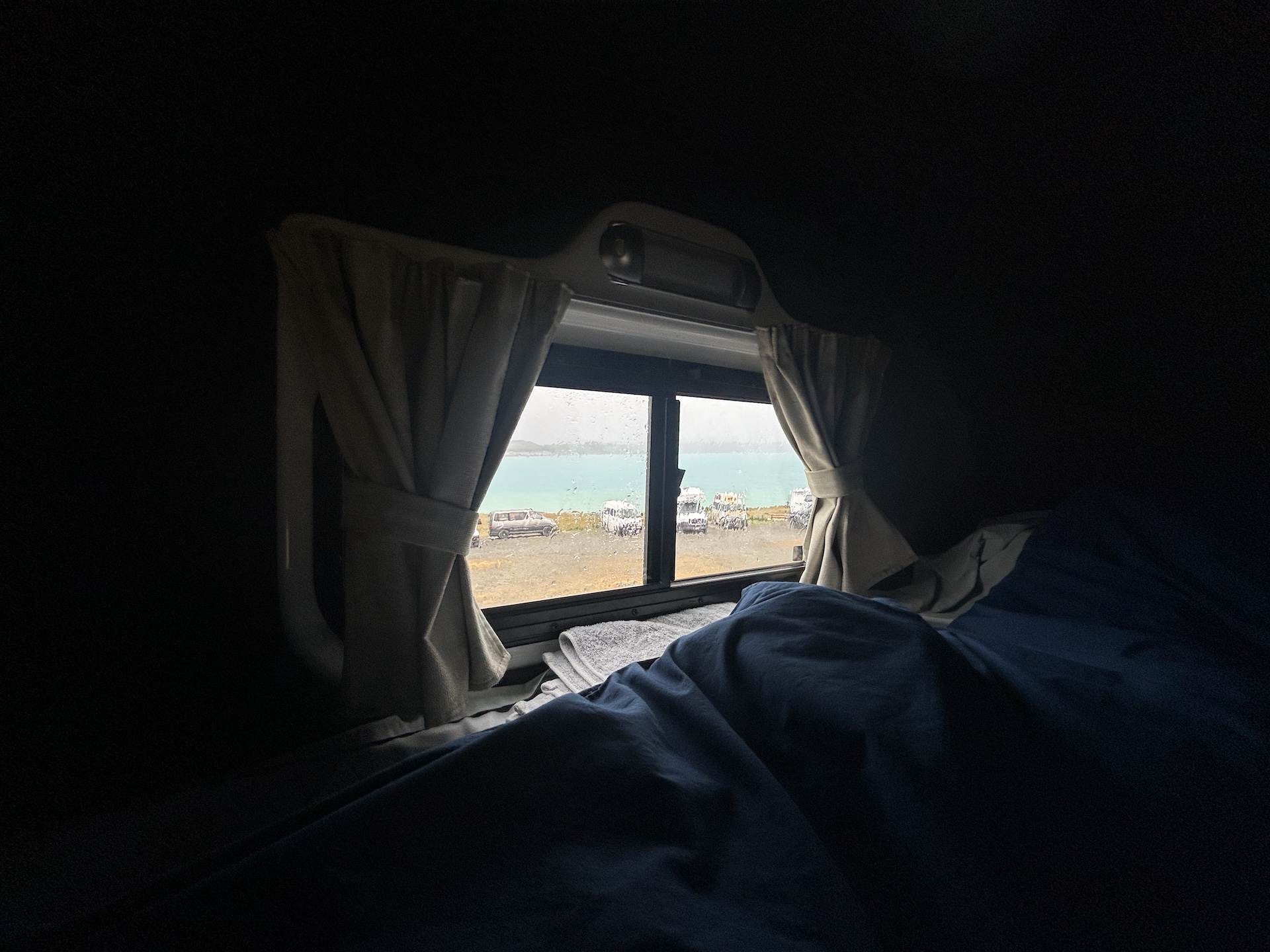
- The Reality: In a van, rain turns your living space into a “tiny prison.” Always have a “Plan B” (like a local library, a cinema, or an aquatic center).
- Internal Link: If you’re looking for a budget-friendly route for when the weather is good, check out my previous post on 7-Day Realistic South Island Road Trip Itinerary (Family-Friendly & Budget-Conscious).
Essential Gear for the “Practical” Family Traveler
Don’t overpack, but don’t under-prepare. Here is what we actually use:
- Packing Cubes: There are no wardrobes in a van. Everyone gets one cube. If it doesn’t fit, it stays home.
- Headlamps: Essential for those midnight bathroom runs across a dark campsite.
- Soft Luggage: Never bring hard-shell suitcases. There is nowhere to store them. Use duffel bags that can be folded flat.
- Velcro Strips: I use these to stop cupboard doors from rattling while driving. It saves my sanity.


Travel Statistics for New Zealand Families
- Road Safety: Approximately 70% of New Zealand’s roads are two-lane highways (one lane each way). This requires high concentration when driving a heavy motorhome, especially with noisy kids in the back.
- Rainfall Data: The West Coast of the South Island can receive over 2,000mm of rain annually. If you are heading there, check the forecast daily. A trapped family in a van during a storm is a test of marriage strength!
- Campsite Availability: During the summer peak (Dec-Feb), popular holiday parks reach 95% occupancy. Always book at least 3 months in advance for family-friendly spots.
Frequently Asked Questions (FAQ)
Q: Do I need a special license to drive a campervan in NZ?
A: Most 2-to-6 berth campervans can be driven with a standard car license, provided it is in English or you have an International Driving Permit (IDP).
Q: Is “Freedom Camping” easy with kids?
A: Honestly, no. With kids, you want the power hookups (to charge iPads!), hot showers, and playgrounds found at paid holiday parks. Freedom camping is better for couples or solo travelers who don’t mind “roughing it” without a toilet block nearby.
Q: Can I rent car seats with the van?
A: Yes, all major rental companies (Maui, Britz, Jucy) offer them for a fee. However, I always recommend bringing your own if you are worried about comfort, as rental seats can be quite basic.
Q: Is it cold sleeping in a van?
A: If you are plugged into power at a campsite, you can use a small electric heater (most rentals provide one). If you are “off-grid,” it can get very chilly, even in summer.
Final Thoughts
My 7-year-old finally got his “campervan memory” on this last trip. Watching her climb the ladder to her bunk bed with a giant grin made the 500km drive worth it.

The New Zealand campervan with kids experience is a rite of passage. It teaches children flexibility, simplicity, and a love for the outdoors. But it doesn’t have to be a struggle. By choosing the right age and the right pace, you turn a “trip” into a “vacation.”
If your children are still in nappies or prone to “runner” tantrums, my advice is simple: Wait. New Zealand’s mountains aren’t going anywhere. Wait until they can climb those van stairs themselves. You’ll enjoy the view much more when you aren’t worried about someone falling out of the door.